



sample
no. 01est. 2026
Wave Research Labs
MOTS-c
40 mg · lyophilized
- lot
- WRL-2611-MOT4
- purity
- 99.3% rep.
for research use only.
not for human consumption.
not for human consumption.
$65.00sampleAdd to cart
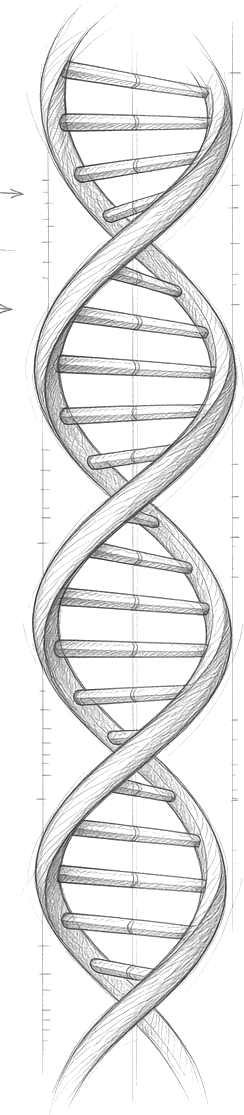
Peptides are short chains of amino acids joined by peptide bonds, and many act as signaling molecules that bind specific receptors. Bioregulators are among the shortest, two to seven residues, studied for how they interact with DNA and chromatin and influence gene expression in particular tissues.
Each label gives the compound, its vial size and form.
Seven short-peptide bioregulators, open for pre-order. Each label links to its mechanism and pathway in Compendium Vol. II.
Eight compounds in stock · three coming soon · seven on presale sampleWhat each compound is ↓
Chemistry and history only. Each entry summarizes published research literature for reference. Nothing here is a claim about use.
A short peptide encoded within the mitochondrial genome, in the gene for 12S ribosomal RNA (MT-RNR1). It is studied in cell and animal models for its role in metabolic signalling between the mitochondria and the nucleus.
Origin. Described in 2015 by Changhan Lee and colleagues in the Pinchas Cohen laboratory, University of Southern California.
A fragment of the larger precursor protein prothymosin alpha, and the first peptide from thymosin fraction 5 to be fully sequenced and synthesized. Its interactions with immune-cell receptors, including toll-like receptors, are a long-standing subject of immunology research.
Origin. Isolated from thymosin fraction 5 and sequenced by Allan Goldstein, Teresa Low and colleagues, 1977.
A small aromatic-cationic peptide containing the unnatural residue 2′,6′-dimethyltyrosine (Dmt). It concentrates at the inner mitochondrial membrane, where its binding to the phospholipid cardiolipin is a principal focus of research.
Origin. One of the Szeto–Schiller peptides, named for Hazel Szeto and Peter Schiller; reported as mitochondria-targeted by Zhao, Szeto and colleagues, 2004.
The full 44-residue sequence of human growth-hormone-releasing hormone, with a trans-3-hexenoyl group added at the N-terminus. The modification makes it more resistant to cleavage by dipeptidyl peptidase than the native hormone. It acts on the GHRH receptor of the pituitary.
Origin. Developed by Theratechnologies, Montréal, Canada.
A synthetic pentapeptide that binds the growth hormone secretagogue receptor (GHS-R1a), the receptor for ghrelin. In early animal studies it was characterized by its selectivity, with little measured effect on ACTH or cortisol.
Origin. Developed at Novo Nordisk, derived from GHRP-1; described by Raun and colleagues, 1998.
The last three residues of α-MSH, studied as a free tripeptide. In intestinal epithelial and T-cell lines it is taken up by the di/tripeptide transporter PepT1, and at nanomolar concentrations it is reported to inhibit NF-κB and MAP kinase activation in cell and mouse models of inflammation.
Origin. The C-terminal tripeptide (residues 11–13) of α-melanocyte-stimulating hormone. Its transport by PepT1 was characterized by Dalmasso, Merlin and colleagues, Emory University, 2008.
Selank is the immunopeptide tuftsin (Thr-Lys-Pro-Arg) extended with Pro-Gly-Pro. In published work on the unmodified peptide it inhibits enkephalin-degrading peptidases in plasma, and in rat frontal cortex it alters the expression of genes involved in GABAergic neurotransmission.
Origin. Selank was developed at the Institute of Molecular Genetics, Russian Academy of Sciences, Moscow (Nikolai Myasoedov and colleagues). This form adds an N-terminal acetyl group and a C-terminal amide.
Semax joins the adrenocorticotropin fragment ACTH(4–7) to a C-terminal Pro-Gly-Pro. In rat studies of the unmodified peptide it raises hippocampal BDNF levels and TrkB phosphorylation, and alters transcription of neurotrophin and Trk receptor genes.
Origin. Semax was developed at the Institute of Molecular Genetics, Russian Academy of Sciences, Moscow (Nikolai Myasoedov and colleagues). This form adds an N-terminal acetyl group and a C-terminal amide.
A 15-residue partial sequence of “body protection compound”, a protein described in human gastric juice. In endothelial cell studies it is reported to activate the VEGFR2–Akt–eNOS signalling pathway, and in tendon fibroblasts to increase FAK and paxillin phosphorylation.
Origin. Described by Predrag Sikirić and colleagues as a partial sequence of a protein from human gastric juice, first reported in the early 1990s.
A synthetic, N-acetylated copy of the LKKTETQ segment of thymosin β4, the major actin-sequestering protein of eukaryotic cells. Residues 17–23 form the central actin-binding site of the parent protein, which cell studies associate with actin binding and cell migration.
Origin. Derived from thymosin β4, a 43-residue protein found in essentially all cells and body fluids.
A tripeptide first reported in human serum that binds copper(II). The structure of the copper complex in solution has been studied by spectroscopy, and in fibroblast cultures the complex is reported to stimulate collagen synthesis.
Origin. The tripeptide was first reported in human serum by Loren Pickart and Melvin Thaler, 1973.
Seven short-peptide bioregulators: chemistry, mechanism and pathway as reported in published research. Nothing here is a claim about use. Back to the presale shelf ↑
A circulating thymic peptide first isolated from pig serum, with an N-terminal pyroglutamate. It is the oldest entry in this volume and the only one discovered outside the St. Petersburg program.
Mechanism. Biologically active only when bound to zinc. NMR and antibody studies describe a distinct zinc-coupled conformation, and the peptide was first characterized through its effect on T-cell differentiation markers.
Pathway. Reported in animal and cell models to reduce p38 MAPK phosphorylation and NF-κB signalling in inflammation models.
Origin. Isolated and sequenced by Mireille Dardenne, Jean-Marie Pléau, Jean-François Bach and colleagues, Paris, 1977.
A synthetic tripeptide from the St. Petersburg bioregulator program, catalogued by its developers as a vascular-tissue peptide.
Mechanism. Proposed to enter the nucleus and bind DNA. In cell-culture studies it is reported to change expression of the senescence genes p16 and p21 and of the differentiation markers nestin and GAP43.
Pathway. Cell-senescence (p16/p21) and differentiation-factor signalling, including CXCL12 in fibroblast cultures.
Origin. Vladimir Khavinson and colleagues, St. Petersburg Institute of Bioregulation and Gerontology.
Not a single synthetic peptide. It is a peptide complex extracted from the thyroid tissue of young calves, and no defined amino-acid sequence has been published for it.
Mechanism. Described by its developers within the same short-peptide gene-regulation model as the synthetic bioregulators. Thyroid-specific mechanistic data in the indexed literature are limited.
Pathway. Not established in published literature.
Origin. St. Petersburg Institute of Bioregulation and Gerontology (Khavinson program).
A synthetic tripeptide catalogued by its developers among the nervous-tissue peptides, and one of the most studied of the short bioregulators in cell models.
Mechanism. Modelled to partly enter the major groove of DNA, which is aided by Mg²⁺ ions. In cerebellar granule cells it is reported to limit the build-up of reactive oxygen species and to alter the cell cycle.
Pathway. Delayed ERK1/2 (MAPK/ERK) activation, with reported effects on caspase-3, p53, SOD2 and GPX1 expression.
Origin. Vladimir Khavinson and colleagues, St. Petersburg Institute of Bioregulation and Gerontology.
A tetrapeptide designed from the amino-acid analysis of a pineal-gland (epiphysis) peptide complex. AEDG was later detected among that complex’s own tetrapeptides.
Mechanism. Reported to bind histones H1/3 and H1/6, and modelled to bind a DNA sequence that recurs in the telomerase promoter region.
Pathway. Telomerase activity and telomere length in human fetal fibroblast cultures.
Origin. Vladimir Khavinson and colleagues, St. Petersburg Institute of Bioregulation and Gerontology.
A synthetic tripeptide, structurally Bronchogen (AEDL) without its first alanine. Its indexed cell studies use renal cell cultures.
Mechanism. Docking models place it in the minor groove of DNA at AT-rich sequences, and at ctcc sites shared with AEDL.
Pathway. Senescence markers p16, p21 and p53, and SIRT-6 expression, in ageing renal cell culture.
Origin. Vladimir Khavinson and colleagues; described in a 2006 Russian patent filing.
A synthetic dipeptide from the St. Petersburg bioregulator program, studied mainly in thymic and lymphocyte cell cultures. It is the smallest entry in this volume.
Mechanism. Reported to decondense facultative heterochromatin in cultured lymphocytes, including the nucleolus organizer regions. Docking models place KE at agat sequences of DNA.
Pathway. Ribosomal-gene reactivation through chromatin decondensation, and expression of the T-cell differentiation markers CD5 and CD4 in thymic cell cultures.
Origin. Vladimir Khavinson and colleagues, St. Petersburg Institute of Bioregulation and Gerontology.
Four ideas that sit behind every entry in the compendium.
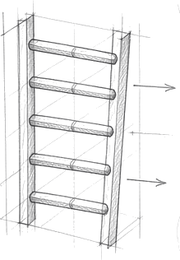
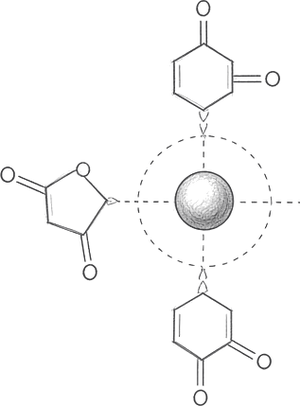
The building blocks. Each has an amino group, a carboxyl group and a side chain that gives it its own size, charge and polarity.
A condensation reaction joins the carboxyl group of one amino acid to the amino group of the next, releasing water and forming the –CO–NH– link.
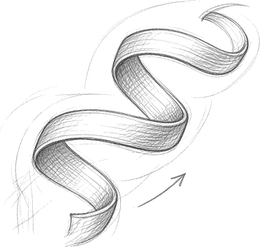
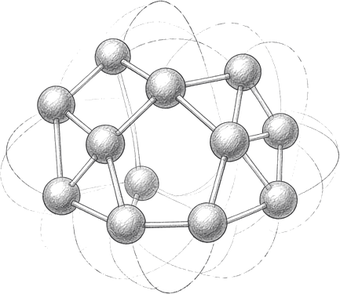
The order of residues, read from N- to C-terminus, sets a chain’s charge and the shapes it can take, from flexible short chains to folded helices.
Many signaling peptides work by fitting a specific receptor, often on the cell surface, which sets off a cascade of signals inside the cell.

Every sequence in the compendium is written from the N-terminus to the C-terminus in three- or one-letter amino-acid codes. Ac- marks an acetylated N-terminus, and -NH₂ marks a C-terminal amide.
Both are short chains of amino acids. They differ in length and origin, and in where their action is thought to begin.
| Signaling peptides | Short-peptide bioregulators | |
|---|---|---|
| Length | Ranges widely. The compounds on our shelf run from 3 to 44 residues. | Two to seven residues. Vilon (Lys-Glu) is a dipeptide. |
| Origin | Hormone fragments, analogs and synthetic designs, such as ACTH(4–7)-Pro-Gly-Pro or GHRH(1–44). | Designed from amino-acid analyses of tissue peptide extracts by Vladimir Khavinson and colleagues, St. Petersburg. |
| Primary target | Receptors, often on the cell surface: the GHRH receptor, the ghrelin receptor (GHS-R1a), the PepT1 transporter. | Proposed to cross the cell and nuclear membranes and interact with histones and DNA. |
| Proposed mode of action | Receptor binding starts an intracellular signaling cascade. | Hypothesized to bind specific DNA sequences in gene promoters, affect chromatin structure and DNA methylation, and shift gene expression in a tissue-specific way. |
| Kind of evidence | Receptor, cell and animal studies across many laboratories. | Mostly cell-culture, molecular-docking and animal studies, largely from the St. Petersburg group and its collaborators. |
| Examples here | Tesamorelin · Ipamorelin · KPV · NA-Semax | Epitalon · Vilon · Pinealon · Vesugen |
Wave Research Labs is a small-batch supplier of research peptides. We keep the shelf short on purpose, so every compound on it can be described properly and handled with care from receipt to shipment.
General guidance for lyophilized peptides.
We can help with compounds, certificates and orders. We can’t advise on dosing or any medical use.
No. Every Wave Research Labs product is sold strictly for laboratory and in-vitro research by qualified researchers. They are not drugs, supplements or cosmetics, are not for human or animal consumption, and have not been evaluated by the FDA to diagnose, treat, cure or prevent any disease.
Yes. The manufacturer’s certificate of analysis for any compound we carry is available on request. Send us the compound name and we’ll email it to you.

Wave Research Labs · Peptides & Bioregulators